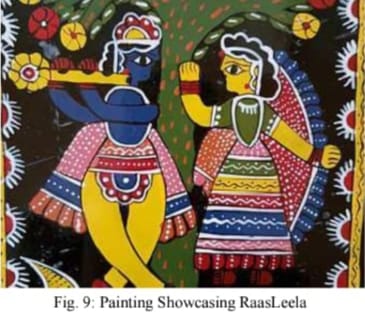
India is known for its rich cultural traditions, and its diversity is reflected in a wide variety of unique and remarkable art and craft forms. These are an integral part of Indian identity, but over time, many of these traditions have faded into obscurity. One such art is Tikuli, a form of hand painting that dates back more than 800 years. Once vibrant and flourishing, this art has now become a neglected and vanishing craft. Tikuli art, a lesser-known but richly vibrant form of painting, originates from the culturally abundant state of Bihar, India. With a history that spans centuries, this exquisite form of artwork is deeply rooted in the traditions of Mithila and has evolved to carry layers of historical, spiritual, and social significance. What makes Tikuli art especially fascinating is not only its aesthetic appeal but also its unique journey of revival through changing economic circumstances and even through challenges like the COVID-19 pandemic. https://amzn.to/4amKmYH This Article, titled “The Revival of a Dying Legacy—Tikuli Art”, is a sincere attempt to highlight the importance of reviving such a heritage craft. It aims to give new life to Tikuli by exploring innovative ideas and techniques that can adapt the art to contemporary needs. Through commercialization and modern product development, the goal is to provide new livelihood opportunities for artisans while preserving this traditional art. INTRODUCTION Tikuli, a local term for “Bindi,” is a dot that signifies a woman’s commitment to her husband and is worn by royal married women in Bihar. The Bindi was a symbol of marriage and commitment for life in ancient India, which was known as the “golden bird” due to its vast gold reserves. Tikuli art during the Mughal rule transformed into a luxurious form of expression, symbolizing class and royalty. Bihar became a hub for this exquisite art, with traders from far-off states to Patna purchasing intricate gold and silver foil designs. However, as machine-made goods took over during industrialization, the handmade beauty of Tikuli began to vanish. The more detailed the design, the higher its value. By 1900, the Tikuli art was facing the threat of extinction. In 1954, Chitracharya Padmashree Upendra Maharathi, a painter, artist, and designer, provided a new dimension to the Tikuli art by adopting the Japanese method to portray the dying Tikuli art on glazed hardboard. Traditionally, Tikuli paintings were made using glass as a canvas. The artist would shape the glass like a balloon and paste gold foil on it, painting over it with delicate and intricate motifs using natural colors and enamel. These artworks, deeply influenced by the styles of Madhubani painting, often featured mythological themes, folklore, and scenes from daily life. The use of strong outlines and bold colors like red, blue, yellow, white, and black gives Tikuli art its distinct identity. However, due to the high cost and fragility of glass, the craft underwent a transformation in recent years. Modern Tikuli artists have adapted the art form onto more durable and cost-effective materials like hardboard and MDF (Medium Density Fibreboard), which not only makes the art more accessible but also opens up creative applications such as decorative plates, coasters, wall hangings, and table mats. The unorganized and largely rural nature of the Tikuli sector, along with outdated production methods, low availability of raw materials, and limited market access, have all contributed to its decline. Indian handicrafts are a unique part of India’s cultural fabric, with their vast, vibrant, colorful, and simple yet graceful charm making them a unique part of India’s cultural fabric. HISTORY A bindi is a traditional forehead decoration worn in South Asia, particularly in India, Bangladesh, Nepal, Sri Lanka, Pakistan, and Mauritius. It is a bright red dot applied in the center of the forehead near the eyebrows, symbolizing the sixth chakra, ajna, the seat of “concealed wisdom.” The bindi is believed to retain energy and strengthen concentration, and represents the third eye. According to the Jabala Upanishad, Avimukta (the middle of the eyebrows) is the abode of Brahman in all beings. Bindis were created from Vedic times to worship one’s intellect, and were used by both men and women. The belief was that on the bindi, a strong individual, family, and society could be formed. Traditional bindis are red or maroon in color, and can be made by applying vermilion powder with a fingertip. For beginners, a small annular disc can be used. Various materials, such as sandal, ‘aguru’, ‘kasturi’, ‘kumkum’, and’sindoor’, can be used to color the dot. PROCESS Originally, it involved melting glass, blowing it into a thin sheet and making and adding traced pattern in natural colors and afterwards embellishing it with gold foil and jewels. The gold foil was etched to form traced patterns and later, natural colours were added for enhancing the etched designs. Tikuli were mainly adorned by Queens and Aristocrat women of yore. Jewels were put on gold leaves according to the status of the women in the society and these beautiful hand crafted Bindi’s were a proud possession of women in India. Later, post British raj and industrialization, machine made bindis replaced Tikuli. For more than a decade there after Tikuli artists were jobless. Many shifted their occupations; others lost their houses. Hence, Shri Upendra Maharathi, a renowned artist then, reestablished the craft in the form of enamel painting on hardboard. The base was prepared out of wood which was coated and smoothed using sand paper 4-5 times till the base was a dark brown/black glistening surface like polished granite. Now ready to be embellished using enamel paint and a fine sable/squirrel hair brush, it was painted by women in single strokes in a complimentary colour scheme using primary colors to create a piece of art. Themes, shapes, colour schemes and style of composition have seen changes since then. Since, enamel paint makes the surface heat proof and water proof, making utilitarian items like coasters, trays and
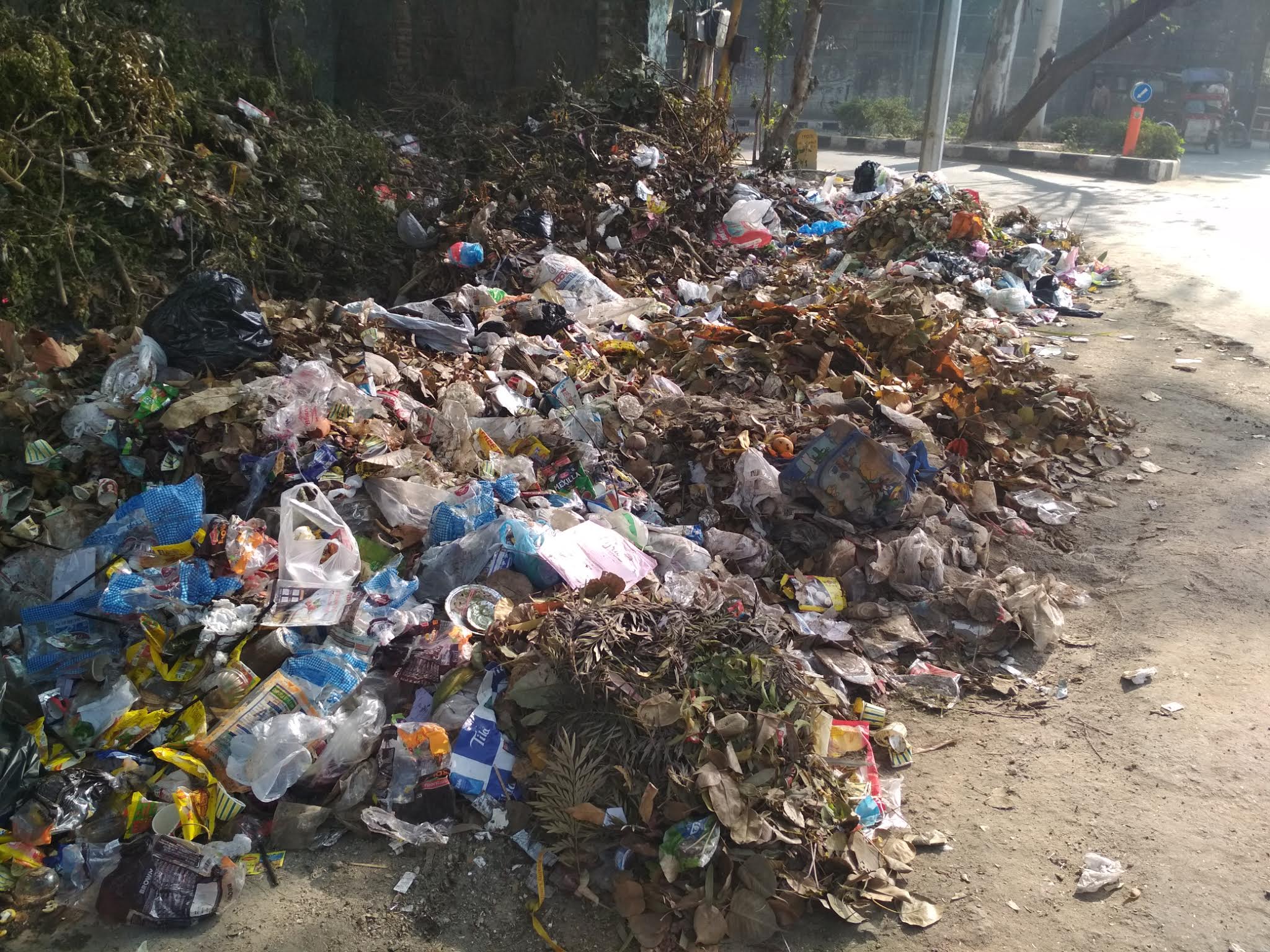
SOUTH INDIA’S STRUGGLE WITH WASTE AND WATER MISMANAGEMENT
South India faces significant challenges in managing municipal solid waste, with issues ranging from inadequate collection and processing to improper disposal and a lack of public awareness. The region struggles with high waste generation rates, especially in urban areas, and a large proportion of waste ends up in landfills or is openly dumped, posing environmental and health risks. Overflowing Cities, Sinking Futures Walk past the towering Kodungaiyur landfill in Chennai or the smoke-shrouded skies of Kochi’s Brahmapuram, and it’s clear: South India is buckling under the weight of its own waste. The numbers are staggering. Every day, the five southern states—Tamil Nadu, Karnataka, Kerala, Andhra Pradesh, and Telangana—generate over 45,000 tonnes of municipal solid waste. That’s nearly one-third of India’s total. With rapid urbanisation and rising consumption, this figure is expected to double by 2035. But it’s not just about volume—it’s about failure. Poor segregation, outdated infrastructure, neglected waste workers, and public apathy have turned trash into a ticking time bomb. A Snapshot of South India’s Waste Landscape Here’s what daily waste generation looks like in some major cities: Hyderabad: 6,500 tonnes, Chennai: 6,300 tonnes, Bangalore: 4,500 tonnes, Coimbatore: 1,100 tonnes and Kochi: 700 tonnes. Yet, less than 30% of this waste is processed scientifically. Most of it ends up in open dumps, burning landfills, or clogged water bodies. In places like Jawahar Nagar (Hyderabad) and Kodungaiyur (Chennai), leachate and methane leak into nearby neighbourhoods, affecting both health and livelihoods. Villages on city outskirts are turning into dumping grounds—without consent, compensation, or accountability. SECTOR-WISE WASTE GENERATION IN INDIA When we break down India’s waste, two things stand out. First, more than 50% of municipal solid waste is organic, made up of food scraps, market waste, and garden clippings. Ideally, this could be composted or turned into biogas. But with over 70% of waste still unsegregated, most of it ends up in dumpsites, mixed with inerts (33%), plastics (6%), and other dry waste. Recyclables—like paper (7%), metals (2%), and glass (2%)—are lost in the mix, reducing both resource recovery and income for waste pickers. Second, when we look at the sectoral sources of this waste, households and public spaces account for about 45%, but industries (25%), agriculture (10%), biomedical (10%), and e-waste (10%) form the rest. These non-household streams often include hazardous materials, but are rarely tracked or treated properly. Together, these two charts reveal a deeper problem: waste in India isn’t just a disposal issue—it’s a mismanagement crisis. Solving it means targeting both what we throw and who throws it. WHY THE SYSTEM IS COLLAPSING ? 1. Lack of Segregation Despite laws mandating source segregation, over 70% of waste remains mixed. This makes recycling or composting virtually impossible. 2.Outdated Infrastructure Dry waste collection centres are sparse. Composting facilities and waste-to-energy plants are either underused or dysfunctional due to poor planning. 3.Invisible Waste Workers South India’s recycling backbone—its 60,000 to 80,000 informal waste workers—remain invisible in policy. Many, often women from marginalized communities, lack basic protections like health insurance or safety gear. 4. Plastic Overload Single-use plastics still dominate markets. Despite bans in Tamil Nadu and Kerala, enforcement is lax, and illegal trade thrives. 5. Failed Waste-to-Energy Projects Several WTE plants shut down due to toxic emissions and community resistance. The 2023 Brahmapuram fire in Kochi was a stark reminder—poisonous smoke from burning plastic engulfed the city for days. A CRISIS BEYOND TRASH This isn’t just a sanitation issue—it’s an environmental and humanitarian crisis. Toxic air from landfill fires, Poisoned rivers like the Adyar (Chennai) and Musinagar (Hyderabad), Health hazards for waste pickers and informal settlers, Destroyed farmlands and contaminated groundwater near dump sites. But in this landscape of neglect, Bangalore is carving a different path. BANGALORE: FROM GARBAGE CITY TO GREEN HOPE Once infamous for its 2012 garbage crisis, Bangalore is slowly transforming into a model of urban resilience. Generating over 4,500 tonnes of waste daily, the city is investing in solutions rooted in community action, decentralised systems, and smart technology. Here’s how it’s making a difference: 1. Segregation at Source Bangalore mandates household-level segregation into wet, dry, and hazardous waste. In areas like HSR Layout and JP Nagar: QR-coded bins and tracking apps are in use. Kannada-language campaigns build awareness. Fines and incentives promote compliance. In well-segregated wards, up to 70% of waste is diverted from landfills. 2. Composting & Biomethanation Since 60% of Bangalore’s waste is organic, the focus is on converting it into resource. Kasa Rasa, a citizen-run composting unit in Koramangala, is a local success. Biogas plants at Domlur and KR Market turn food waste into cooking fuel. BBMP mandates bulk generators (like tech parks) to manage their own waste on-site. 3. Dignity for Waste Workers Groups like Hasiru Dala and Saahas Zero Waste have transformed waste work in Bangalore. Workers now have ID cards, safety gear, and access to healthcare. Many are part of formal collection systems, with regular pay and recognition. Still, more needs to be done—legal protections and co-operative ownership are the next steps. 4. Smart Technology for Smarter Cities Tech is helping streamline waste operations: GPS-tracked collection trucks. IoT-enabled bins. Citizen complaint redressal via the Swachhata App. Real-time ward-level performance dashboards. Bangalore is exploring AI-based sorting and open data platforms to reduce leakages and corruption. 5.Circular Economy & Safe Waste-to-Energy While past WTE models failed, new approaches are emerging: RDF (Refuse-Derived Fuel) plants at Kannahalli and Doddabidarakallu process 750 tonnes/day. Startups like Swachha Eco Solutions upcycle plastic into tiles and furniture. But the key lies in Extended Producer Responsibility (EPR)—holding brands accountable for the waste they create. 6.Rebuilding Infrastructure Instead of centralised landfills, Bangalore is building decentralised hubs: Composting and biogas units at ward level. More Dry Waste Collection Centres (DWCCs). Engineered landfills with leachate control and gas capture. It’s a slow process—but the blueprint is changing. 7. Pay-As-You-Throw Pilots in select wards are testing user fees and Pay-As-You-Throw (PAYT) models. Bulk generators like malls and hotels are being charged. Households may follow, depending on volume and segregation. This economic shift encourages responsibility—and disincentivises waste. 8.Civic Action & Behavioural Change At the heart
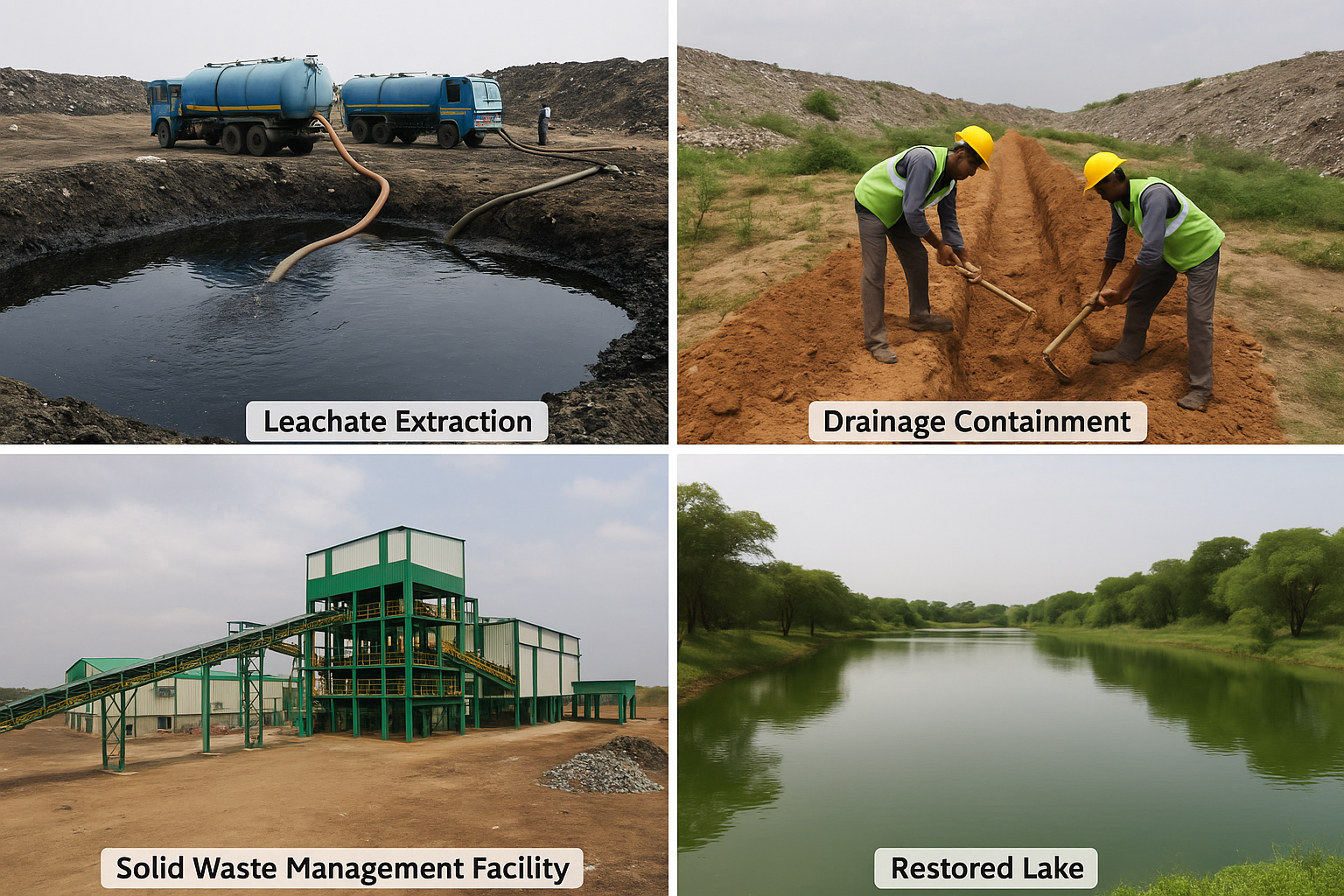
Bhandwari Lake Restoration
Originally part of the Aravalli hill ecosystem, the Bhandwari landfill sits adjacent to water bodies that act as seasonal ponds. Over time, untreated leachate from the landfill seeped into these ponds—contaminating groundwater, harming flora and fauna, and posing health hazards to nearby forest land and wildlife. The problem escalated to the extent that animals in the Aravalli forests were reportedly drinking from these toxic reservoirs. ✅ Restoration Actions Underway 1. Leachate Extraction & Treatment Tanker-based removal: The Municipal Corporation of Gurugram (MCG) has begun pumping legacy leachate from the landfill’s ponds into tankers. STP discharge: These tankers transport leachate to the Behrampur and Dhanwapur sewage treatment plants—each with over 400 MLD capacity—for safe treatment before discharge. MCG aims to empty the polluted ponds before the monsoon and plans additional infrastructure to halt leachate infiltration into adjacent forests. 2. Drainage Containment A dedicated drainage network is being constructed around the landfill to prevent future leaks. This includes: Trenching systems Bund formations Strategic redirection of surface water These efforts are designed to contain current contamination and block further spread into groundwater and forest areas . 3. Solid Waste Management Upgrade The Bhandwari solid waste management facility is being revived under a public-private partnership from 2017–2019, with backing from Ecogreen Energy Pvt Ltd. The ₹4.3 billion project includes: Daily handling of 1,250 TPD of waste Processing via refuse-derived fuel (RDF) Generation of ~10 MW of energy per day This redevelopment is key to reducing landfill size and subsequent contamination. 🦺 Local & Ecological Importance Forest protection: These ponds are located in the Aravalli buffer zone, home to diverse wildlife. Clearing leachate helps restore ecological balance. Public health: Reducing groundwater pollution is vital for nearby human populations—especially as toxic leachate seepage can render water unsafe. Environmental compliance: Prompted by local activism, the initiative aligns with legally binding obligations to preserve forest ecosystems. 🚧 Challenges & What Lies Ahead Challenge Description Speed vs. scale The quantity of leachate is large; clearing it before the monsoon demands logistical precision. Long-term prevention Beyond emergency pumping, long-term solutions like engineered liners and continuous monitoring are needed. Governance coordination Integrating MCG, Haryana Govt, STPs, and private partners requires strong oversight. Community engagement Ensuring transparency, updates, and public reassurance is crucial. 🌱 Restoration Roadmap – What Next Advanced lining and cap systems for the landfill to halt future leachate generation. Routine environmental monitoring of water quality and wildlife health. Engineering wetlands or bio-treatment zones to naturally manage minor seepage. Waste diversion strategies—such as composting and recycling—to minimize landfill input. Community stewardship and educational outreach to maintain vigilance and awareness. ✅ Conclusion The Bhandwari Lake restoration is a vital environmental intervention. From actively removing hazardous leachate and bolstering drainage infrastructure to revamping waste management operations, the success of this initiative will directly protect the Aravalli forests, groundwater reserves, and regional ecosystems. But this must be more than a short-term fix. A forward-thinking, sustainable strategy involving engineering safeguards, community participation, and pollution prevention is essential to ensure the landfill doesn’t turn into a recurring ecological threat. 📣 How You Can Contribute Stay informed through MCG and Haryana government disclosures. Join or support local environmental groups monitoring forest and water health. Encourage practices like waste segregation and composting to reduce landfill waste. Advocate for robust engineering solutions—like geomembrane liners—at municipal and civic forums. Together, Gurugram can set a benchmark for landfill rehabilitation and natural resource restoration in urban India. For more such articles, please visit ecodastkaari.in.
Aravallis and Delhi Ridge
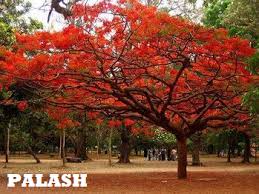
The Aravallis are one of the oldest landforms on the Earth (dating back 350 million years). They stretch across four states (Delhi, Haryana , Rajasthan & Gujarat). “Aravalli” is a Sanskrit word which can be broken into Ara and Valli which means “line of peaks”. The Aravalli mountain range stretches over 800 km from Gujarat to Delhi. By the time the they reach Delhi, they get inundated under a swathe of young alluvium, only rising occasionally as hillocks like the Raisina Hill, upon which rest the North Block, South Block and Rashtrapati Bhawan. From Delhi, it bounds up to Haridwar, hidden entirely below the Earth’s surface. Then it extends towards the Thar desert. A number of well known rivers like the Sabarmati in Gujarat and lesser known rivers like Luni and Vakal in Rajasthan or Sabi or Indori in Haryana originate in these hills. It supports natural marvels like the brackish Sambhar Lake, Rajasthan and Sultanpur Lake, Haryana as well as man-made wetlands like Ramgarh Lake in Jaipur or Pichola Lake in Udaipur. The Delhi Ridge The Aravallis are the “Green Lungs” of Delhi, protecting the city from hot winds coming from the Thar. They have also enabled Delhi to be the world’s second most Bird-Rich capital, after Kenya’s Nairobi. For administrative reasons, the Delhi Ridge has been divided into four parts : Northern, Central, South Central and Southern. Together they cover almost 7,777 hectares and declared a reserved Forest area in 1993, putting a halt on all construction activities. The Delhi Ridge serves as as a source of fodder and fuel wood for poor and marginalized communities living in the vicinity. During summers, its trees are decorated with yellow flowers of Amaltas, Orange flowers of Palash and white flowers of Chamrod. Northern Ridge Also referred to as the Kamala Nehru Ridge, it covers an area of 87 hectares and is located near the North Campus of Delhi University. The area consists of an eclectic blend of nature and history and houses the Northern Ridge Biodiversity Park also known as Bonta Park, developed and maintained by the Delhi Development Authority (DDA). As a local resident, We used to go there for our evening walks during Corona. There are lot of monkeys over there. You get an experience of walking through a Forest and if lucky, you can hear the wild calls of a Robin or a beautiful Peafowl. Historical monuments Flagstaff Tower The North Ridge encompasses several monuments that date from as antiquated as the pre-Mughal era to the colonial British period. [12][13][14] Mutiny Memorial Ashokan Pillar Pir Ghaib (inside Hindu Rao Hospital) Baoli (Step well) inside Hindu Rao Hospital Chauburja Masjid Flagstaff Tower Eastern Guard House Mutiny Memorial Delhi-Topra pillar, brought to Delhi from Topra Kalan by Firuz Shah Tughlaq in 1356 Southern Guard House Pir Ghaib, a 14th-century hunting lodge and Observatory built by Feroz Shah Tughlaq Chauburji Masjid Baoli (Stepwell) inside Hindu Rao Hospital Central Ridge The Central Ridge includes 864 hectares of forestry which were designated a Reserved Forest in 1914, and spans from the southern fringes of Sadar Bazaar to Dhaula Kuan. Buddha Jayanti Park Buddha statue in the Buddha Jayanti Park The Buddha Jayanti Smarak Park is situated in the central part of the Delhi Ridge in New Delhi, India. It occupies a stretch of almost a kilometre on the eastern section of Vandemataram Marg, also known as Upper Ridge Road. It was established on the 2500th anniversary of Gautama Buddha‘s enlightenment by Indian architect M. M. Rana. A sapling of the Bodhi Tree from Sri Lanka was planted here by the then Prime Minister of India Lal Bahadur Shastri on 25 October 1964. On an artificial island in the park stands a pavilion housing a gilded Buddha statue, which was dedicated by the 14th Dalai Lama in October 1993. Each year in May, on the full moon day of Vaisakha, the Buddha Jayanti festival is celebrated here. Neeraj Gupta, an Indian sculpture artist and environmentalist, is the president of Buddha Jayanti Park. In August 2023, Gupta organized a plantation program that resulted in the planting of 1,000 Cassia fistula (Amaltas) trees. Historically, the major activities contributing to the degradation of the Ridge have been : Illegal Mining Construction of buildings, roads and housing Conversion of Forest land into Parks Activities like Garbage Dumping and over-grazing Introduction of Invasive Species like Vilayati Keekar Major References : Plants of the Northern Aravalli Range in Delhi, A Guide, Dept of Forest & Wildlife, GNCT of Delhi

The Healing Power of Naturopathy: Embracing Nature for Health and Wellness
In an age where modern medicine and technology often take centre stage in healthcare, there’s a growing interest in returning to nature’s roots. One of the most holistic and time-tested approaches to health is naturopathy, an alternative medicine system that focuses on the body’s ability to heal itself with the aid of natural therapies. What is Naturopathy? Naturopathy is a system of medicine that emphasizes the body’s intrinsic healing powers. Rather than just treating symptoms, naturopathy aims to treat the root cause of illness and promote overall well-being by supporting the body’s natural processes. This approach is grounded in principles that focus on the body’s inherent ability to maintain health when provided with the right conditions. The core philosophy of naturopathy revolves around the following principles: The Healing Power of Nature: Naturopaths believe that the body has an innate ability to heal itself when supported properly. Identify and Treat the Cause: Instead of merely addressing symptoms, naturopathy seeks to understand the underlying causes of illness. First Do No Harm: Naturopathic treatments are generally non-invasive and aim to work in harmony with the body. Doctor as Teacher: Naturopaths educate patients about healthy living practices, empowering them to take control of their health. Treat the Whole Person: Naturopathy focuses on the mind, body, and spirit, acknowledging the interconnectedness of all aspects of health. Prevention: Emphasizing the importance of maintaining health rather than just curing disease. Key Principles of Naturopathic Treatment Naturopathy doesn’t rely on a one-size-fits-all model. Instead, it considers each individual’s unique physical, emotional, and spiritual needs. Treatments may involve a combination of therapies, and here are some of the most common ones: Herbal Medicine: Plants have been used for centuries to treat a variety of conditions. Herbal remedies can support immune function, promote detoxification, and provide essential nutrients to the body. Nutrition and Diet: Food is a fundamental part of naturopathy. Practitioners often advise making dietary changes to address deficiencies, boost energy, and promote healing. Eating whole, unprocessed foods rich in vitamins, minerals, and antioxidants is central to good health. Hydrotherapy: The use of water in various forms—such as hot and cold compresses, saunas, and baths—is thought to stimulate circulation, improve detoxification, and help with pain relief. Homeopathy: A controversial practice in which highly diluted substances are used to stimulate the body’s natural healing responses. Though evidence for homeopathy is mixed, some patients report feeling improvements with this form of treatment. Physical Medicine: Naturopaths may recommend physical therapies, such as massage, chiropractic adjustments, or exercises that help realign the body and relieve stress and tension. Mind-Body Therapies: Practices like yoga, meditation, and mindfulness are encouraged to reduce stress, support mental clarity, and improve emotional health. These therapies are based on the understanding that mental and emotional well-being are crucial for physical health. Detoxification: Fasting, cleansing diets, or other natural methods are sometimes used to help eliminate toxins from the body, improving digestion, energy, and skin health. Benefits of Naturopathy Personalized Care: Naturopathic doctors often take the time to get to know their patients, tailoring treatments to the individual’s specific health needs and lifestyle. Holistic Approach: Naturopathy treats the whole person—not just the disease. It considers the physical, emotional, and mental well-being of the patient, aiming for balance in all areas of life. Focus on Prevention: Naturopathy is proactive rather than reactive. It encourages a lifestyle that fosters long-term wellness and prevents the onset of illness before it begins. Gentle, Natural Treatments: Naturopathic therapies are generally considered gentle and non-invasive, with minimal side effects. Many patients are drawn to naturopathy as a safer alternative to pharmaceutical treatments. For detailed information about Naturopathic Lifestyle, you can visit Wellcure.com and for information about Detox camps you can contact ecodastkaari.in .