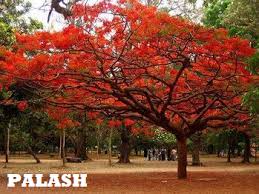
The Aravallis are one of the oldest landforms on the Earth (dating back 350 million years). They stretch across four states (Delhi, Haryana , Rajasthan & Gujarat). “Aravalli” is a Sanskrit word which can be broken into Ara and Valli which means “line of peaks”. The Aravalli mountain range stretches over 800 km from Gujarat to Delhi. By the time the they reach Delhi, they get inundated under a swathe of young alluvium, only rising occasionally as hillocks like the Raisina Hill, upon which rest the North Block, South Block and Rashtrapati Bhawan. From Delhi, it bounds up to Haridwar, hidden entirely below the Earth’s surface. Then it extends towards the Thar desert. A number of well known rivers like the Sabarmati in Gujarat and lesser known rivers like Luni and Vakal in Rajasthan or Sabi or Indori in Haryana originate in these hills. It supports natural marvels like the brackish Sambhar Lake, Rajasthan and Sultanpur Lake, Haryana as well as man-made wetlands like Ramgarh Lake in Jaipur or Pichola Lake in Udaipur. The Delhi Ridge The Aravallis are the “Green Lungs” of Delhi, protecting the city from hot winds coming from the Thar. They have also enabled Delhi to be the world’s second most Bird-Rich capital, after Kenya’s Nairobi. For administrative reasons, the Delhi Ridge has been divided into four parts : Northern, Central, South Central and Southern. Together they cover almost 7,777 hectares and declared a reserved Forest area in 1993, putting a halt on all construction activities. The Delhi Ridge serves as as a source of fodder and fuel wood for poor and marginalized communities living in the vicinity. During summers, its trees are decorated with yellow flowers of Amaltas, Orange flowers of Palash and white flowers of Chamrod. Northern Ridge Also referred to as the Kamala Nehru Ridge, it covers an area of 87 hectares and is located near the North Campus of Delhi University. The area consists of an eclectic blend of nature and history and houses the Northern Ridge Biodiversity Park also known as Bonta Park, developed and maintained by the Delhi Development Authority (DDA). As a local resident, We used to go there for our evening walks during Corona. There are lot of monkeys over there. You get an experience of walking through a Forest and if lucky, you can hear the wild calls of a Robin or a beautiful Peafowl. Historical monuments Flagstaff Tower The North Ridge encompasses several monuments that date from as antiquated as the pre-Mughal era to the colonial British period. [12][13][14] Mutiny Memorial Ashokan Pillar Pir Ghaib (inside Hindu Rao Hospital) Baoli (Step well) inside Hindu Rao Hospital Chauburja Masjid Flagstaff Tower Eastern Guard House Mutiny Memorial Delhi-Topra pillar, brought to Delhi from Topra Kalan by Firuz Shah Tughlaq in 1356 Southern Guard House Pir Ghaib, a 14th-century hunting lodge and Observatory built by Feroz Shah Tughlaq Chauburji Masjid Baoli (Stepwell) inside Hindu Rao Hospital Central Ridge The Central Ridge includes 864 hectares of forestry which were designated a Reserved Forest in 1914, and spans from the southern fringes of Sadar Bazaar to Dhaula Kuan. Buddha Jayanti Park Buddha statue in the Buddha Jayanti Park The Buddha Jayanti Smarak Park is situated in the central part of the Delhi Ridge in New Delhi, India. It occupies a stretch of almost a kilometre on the eastern section of Vandemataram Marg, also known as Upper Ridge Road. It was established on the 2500th anniversary of Gautama Buddha‘s enlightenment by Indian architect M. M. Rana. A sapling of the Bodhi Tree from Sri Lanka was planted here by the then Prime Minister of India Lal Bahadur Shastri on 25 October 1964. On an artificial island in the park stands a pavilion housing a gilded Buddha statue, which was dedicated by the 14th Dalai Lama in October 1993. Each year in May, on the full moon day of Vaisakha, the Buddha Jayanti festival is celebrated here. Neeraj Gupta, an Indian sculpture artist and environmentalist, is the president of Buddha Jayanti Park. In August 2023, Gupta organized a plantation program that resulted in the planting of 1,000 Cassia fistula (Amaltas) trees. Historically, the major activities contributing to the degradation of the Ridge have been : Illegal Mining Construction of buildings, roads and housing Conversion of Forest land into Parks Activities like Garbage Dumping and over-grazing Introduction of Invasive Species like Vilayati Keekar Major References : Plants of the Northern Aravalli Range in Delhi, A Guide, Dept of Forest & Wildlife, GNCT of Delhi
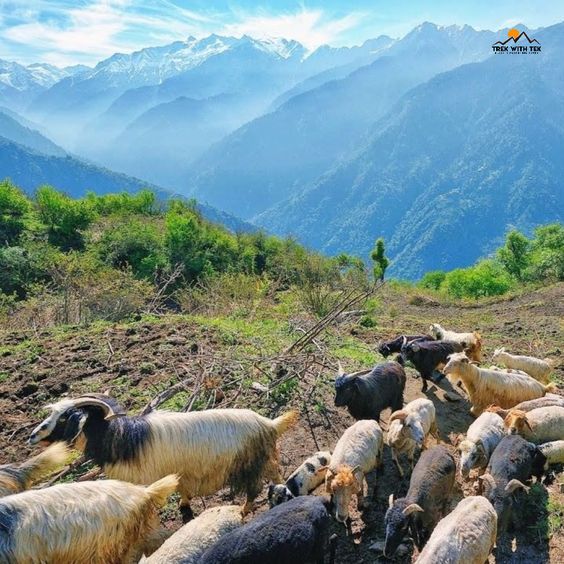
Top 5 National Parks in India
India is home to more than 100 National Parks with an immense variety of Flora and Fauna. Some of them are designated as UNESCO Heritage Sites also. Let’s discuss some of the prominent ones. 1. Jim Corbett National Park Established in 1936, this is India’s first national park. It is named after the legendary naturalist and conservationist Jim Corbett. Located at the Himalayas’ foothills, near the popular hill-station of Nainital, the beautiful Jim Corbett National Park, is famous for being home to a large number of tigers, the highest among any Indian national park. Spread over 1318.54 sq km, of which 520 sq km is the main area, and the remaining is buffer; the park is spread over the picturesque landscapes of Pauri Garhwal, Almora, and Nainital. The jeep safari into the dense forest to see the wild animals in their natural habitat is a must-have experience. And if you are lucky, then you may get a chance to even spot a tiger. While on the jeep safari, enjoy the lush green forest’s views cut across by streams and rivers and a few waterfalls. There are accommodations available inside the park for night-stay as well, which offer you once-in-a-lifetime experience. 2. Great Himalayan National Park This National Park in the western part of the Himalayan Mountains in the northern Indian state of Himachal Pradesh is characterized by high alpine peaks, alpine meadows and riverine forests. The 90,540 ha property includes the upper mountain glacial and snow meltwater sources of several rivers, and the catchments of water supplies that are vital to millions of downstream users. It is part of the Himalaya biodiversity hotspot and includes twenty-five forest types along with a rich assemblage of fauna species, several of which are threatened. This gives the site outstanding significance for biodiversity conservation. It is declared as UNESCO World Heritage Site in June 2014. There are several popular trekking routes in the park, ranging from those that can be done in a day or two, to mesmerizing Tirthan Valley, Jhibhi also known as Mini Thailand . Ecotourism and homestay tourism has also being gaining popularity in places near to the park. 3.Sasan Gir National Park Gir National Park is the only place in the world outside Africa where a lion can be seen in its natural habitat. The Lions of Gir are a majestic animal, averaging 2.75 metres in length, and with a bigger tail tassle, bushier elbow tufs and prominent belly folds than his African cousin which has larger mane. Gir is a home to 40 species of mammals and 425 species of birds. Established by Nawab of Junagarh‘s private hunting area in 1965, with a total area of 1,410.30 km2 (544.52 sq mi), of which 258.71 km2 (99.89 sq mi) is fully protected as a national park and 1,151.59 km2 (444.63 sq mi) as wildlife sanctuary. It is part of the Khathiar-Gir dry deciduous forests ecoregion. The count of 2,375 distinct fauna species of Gir includes about 38 species of mammals, around 300 species of birds, 37 species of reptiles and more than 2,000 species of insects. The carnivores group mainly comprises the Asiatic lion, Indian leopard, jungle cat, striped hyena, golden jackal, Bengal fox, Indian gray mongoose, ruddy mongoose, and honey badger. Asiatic wildcat and rusty-spotted cat occur, but are rarely seen. The main herbivores of Gir are chital, nilgai, sambar, four-horned antelope, chinkara and wild boar. Blackbucks from the surrounding area are sometimes seen in the sanctuary. Among the smaller mammals, porcupine and hare are common, but the pangolin is rare. The Sasan Gir National Park is an esteemed wildlife destination in India which has attained an immense popularity among vivid travellers, wildlife lovers, photographers, nature enthusiasts, researchers and hunters. Being the only destination to spot the Asiatic Lions in India, it keeps on attracting large number of travellers from several parts of the world for its Wildlife Safaris. 4. Silent Valley National Park Silent Valley National Park is a national park in Kerala, India. It is located in the Nilgiri hills and has a core area of 89.52 km2 (34.56 sq mi). It is surrounded by a buffer zone of 148 km2 (57 sq mi). This national park has some rare species of flora and fauna. Silent Valley National Park was explored in 1847 by the botanist Robert Wight.[2] It is located in the border of Mannarkkad Taluk of Palakkad district, Nilambur Taluk of Malappuram district, Kerala, and Nilgiris district of Tamil Nadu. It is located in the rich biodiversity of Nilgiri Biosphere Reserve. The Karimpuzha Wildlife Sanctuary, New Amarambalam Reserved Forest, Nedumkayam Rainforest in Nilambur Taluk of Malappuram district, Attappadi Reserved Forest in Mannarkkad Taluk of Palakkad district, and Mukurthi National Park of Nilgiris district are located around Silent Valley National Park. Mukurthi peak, the fifth-highest peak in South India, and Anginda peak are also located in its vicinity. The Bhavani River, a tributary of the Kaveri River, and Kunthipuzha River, a tributary of Bharathappuzha river, originate in the vicinity of Silent Valley. The Kadalundi River also originates in Silent Valley National Park. Silent Valley National Park The national park is one of the last undisturbed tracts of South Western Ghats mountain rain forests and tropical moist evergreen forest in India. Contiguous with the proposed Karimpuzha National Park (225 km2 (87 sq mi)) to the north and Mukurthi National Park (78.46 km2) to the north-east, it is the core of the Nilgiri Biosphere Reserve (1,455.4 km2), and is part of the Nilgiri Sub-Cluster (6,000+ km2), Western Ghats World Heritage Site, recognised by UNESCO in 2007.[3] Plans for a hydroelectric project that threatened the park’s biodiversity stimulated an environmentalist social movement in the 1970s, known as the Save Silent Valley movement, which resulted in cancelling the project and creating the park in 1980. The visitors’ centre for the park is at Sairandhri. 5. Kaziranga National park Kaziranga National Park is a national park in the Golaghat, Sonitpur, Biswanath and Nagaon districts of the state of Assam, India. KNP has 5 ranges. The park, which hosts two-thirds of the world’s Indian rhinoceroses, is a UNESCO World Heritage Site. According to a March 2018 census conducted jointly by the Forest Department of the Government of Assam and some recognized wildlife NGOs, the rhino population in Kaziranga National Park is 2,613. It comprises 1,641 adult rhinos and 385 calves. In 2015, the rhino population stood at 2,401. Kaziranga National Park was declared a Tiger Reserve in 2006. The park is home to large breeding populations of elephants, wild water buffalo, and swamp deer. Kaziranga is recognized as an Important Bird Area by BirdLife International for conservation of avifaunal species which refers as the birds or types of birds found in a specific region, period, or environment. When compared with other protected areas in India, Kaziranga has achieved notable success in wildlife conservation. Located on the edge of the Eastern Himalaya biodiversity hotspot, the park combines high species diversity and visibility. Indian

Top 6 Eco Trekking Trails in India
Being a travelling enthusiast, I love to trek, do Yoga and gradually I am moving towards a healthy and happy lifestyle. So, I thought why not to share all amazing treks that me, my family and friends have experienced in the recent time to give you a more holistic idea of eco trekking and responsible travelling. Trekking in Himachal Pradesh– I was very fortunate to attend a trekking camp during my graduation, because I was also a NCC Cadet. First, we all reached Pathankot then took a train towards Kangra. The trekking expedition was very well planned, there were cadets of various Schools as well as College. We all stayed in a lush green campus of Jawahar Navodaya Vidyalaya, Kangra installed with Solar Panels. Our first trek was towards Baijnath Temple, located in Kangra District of Himachal Pradesh. It was an easy trek, this temple was made by Pandavas during their exile. The outside view of temple was also very amazing. Next Day, We trekked towards a Monastery, namely Tashi Jong Monastery. Visiting a Monastery is always a calming and peaceful experience. But the trek in itself was difficult , we saw lot of amazing things in the trek such as Rubber trees and small waterfalls. I made lot of friends during the trek. Their were Cultural programmes also every evening in which students of each state performed their Folk Dances. I also got an opportunity to witness NCC parade of Cadets which was a mesmerising experience in itself. Next Day, We all went To Kangra Fort in a Bus. We all visited Jwala Devi Temple, Sati’s tongue is believed to have fallen at the very place where Jwala devi Temple is now situated. Kangra Fort is the largest fort in the Himalayas and probably the oldest dated fort in India, built by the royal Rajput family of Kangra State (the Katoch dynasty). On our return we saw Bears through the windows. Next Day was the beautiful experience of a homestay where we enjoyed local authentic food. Our trekking destination was a Tree, where it was believed that Vivekanand Ji meditated. Our next trekking destination was Bir Bling, which is famous for its Paragliding. It was the longest trek, we saw Fire Flies in the evening. One day we also played Volleyball and painted beautiful sceneries. On our return there was an amazing Party organised for all the Cadets by the authorities. In the evening , we also did a photoshoot and received our Certificates and Medals. It was really a lifetime opportunity for me to be a part of this trekking expedition. 2. Triund trek, Mc Leodganj McLeod Ganj or McLeodganj is a suburb of Dharamshala in Kangra district, Himachal Pradesh, India. It is known as “Little Lhasa” or “Dhasa” as the Tibetan government-in-exile is headquartered here and there is a significant population of Tibetans in the region. This is one of my recent trek, we reached Dharamshala, then took a local bus to Mc Leodganj. Then reached hotel and visited Dalai Lama Resident Monastery in the evening. Next day, we started our trek from Bhagsu Nag Temple. It was a 12 Km trek starting with lot of stairs, a dried stream comes in between then comes a steep trek. According to locals, during rains stream flows with water. In mid of trekking, you can take tea and maggi breaks at Cafes beautifully decorated by Waste Warriors Organisation. You will find life and motivation quotes on stones and other beautiful waste to art installations made with eco-bricks and used tetra milk packets making this trek really an eco trek. Then, you reach a spot where you can see two mountains, but the actual point was a bit more farther. Somehow, with the help of guide we reached to the top and took a sigh of relief, because the weather became a bit stormy. There were tents for our night stay, staying in them was a beautiful experience. You can do stargazing, enjoy local food at the top of the Mountains and witness beautiful sunrise amid Dhauladhar ranges next morning. Then we started our journey back to plains. The local cafes of Mc leodganj are also amazing. I bought a woolen cap, jewellery and chamomile tea on my way back home. Due to lack of time, we couldn’t visit St John’s Church at Mc Leodganj and Tea Gardens at Dharamshala. 3. Nainital, Uttarakhand My brother is very fond of Marathons, so he went to this Half Marathon organised in Nainital by Nainital govt. Nainital is a beautiful town in Uttarakhand, India. As soon as you step out of bus and travel half a mile, you get to see an amazing eye shaped, Naini Lake. According to Hindu Mythology, Sati’s right eye fell here, hence it’s called Lake of the eye i.e Nainital. The goddess Shakti is worshiped at the Naina Devi Temple, known by locals as Naini Mata Temple on the north side of the present day lake. Here, you can start your trek by covering the famous 7 points which are tiffin top, eco cave garden, lover’s point, suicide point, lake view point, dried lake view point and finally the peak point where you can take lot of beautiful photographs. If you start early, you can view amazing sunrise amid kumaon hills and other points such as Mukteshwar Dham and Apple farms with the help of telescopes which are easily available there. The amazing part was that he got to see the beautiful snow covered mountains. If you have time, you can visit Kainchi Dham. It is is a Hanuman temple & Ashram which is established by a great saint Shri Neem Karoli Baba in 1960s. It’s a holy temple surrounded by hills ,trees and river flowing besides it. Recently, Virat Kohli and Anushka Sharma also visited this temple. 4. Kudremukh trek, Karnataka This is the most beautiful trek in Karnataka. The nearest railway station is at Mangalore with trains connecting to many cities. The nearest airport is also in Mangalore and is accessible by taxis. Kudre means Horse in
A MEMORABLE TREE WALK
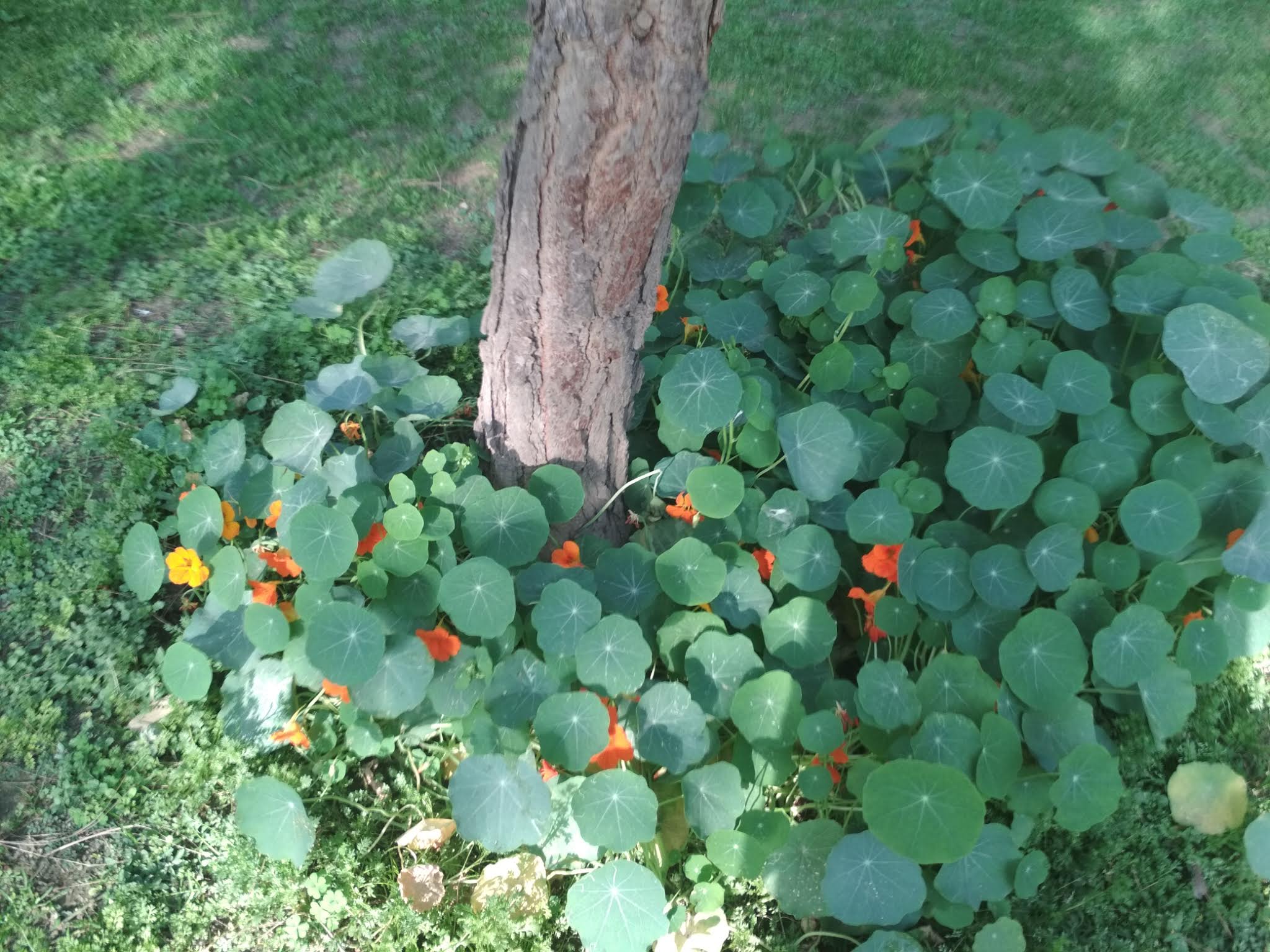
Tree walks give you inner peace and calmness. In Japanese philosophy, trees and Forests cure you. In Modern lifestyle, trees are our best friends. Generally, I love going to parks. Being a Delhite, I have travelled to a lot of beautiful gardens like Lodhi Garden, Raj Ghat, Shakti Sthal, Nehru Park etc. Lodhi garden and Shakti Sthal have a artificial lake which is used for rain water harvesting also. Both lakes are home to a large number of whiteducks, whose quack-quack make your day. So, when I was invited for a tree walk by Manisha ji, CEO of harajeevan.org under the guidance of renowned tree expert Padmavati ji, I thought it to be a routine walk, but it was altogether a different experience. It was an mid afternoon of Spring, I went to the park i.e. Buddha Jayanti park with Manisha ji and her environment enthusiast family. Gradually, around 8-10 people of all age groups joined us and then came the lady , Padmavati ji. I was delighted to see her due to her magical persona.She introduced herself and started the tree walk by focusing on a tree , its leaves and flowers. Then we all moved ahead in the garden blossoming with beautiful flowers. She showed male and female parts of a pine kind of tree which was a new thing for all of us. A musical party wasgoing on side by side and people were throwing wrappers here and there , she got really miffed with that but we couldn’t do anything. Moving on, I got totally mesmerized when she showed us the inner part of ovary of a flower with the help of a magnifying glass, which was a universe initself. There was a Rose Garden also which has almost 25 different varieties of Roses and children were very happy to see them. Then there was beautiful golden statue of Lord Buddha on a manmade island amid a lot of bougainvillea. We all did a quick photo session. Then there was a Relic, which was read by all of us. After that we all seated in a circle and she talked about the relationship of humans with the5 elements of Universe i.e. Sky, Earth, Water ,Air and Fire. Knowledge of these 5 elements allows a person to understand the laws of nature and to use it to attain good Health, Power, Knowledge, Wisdom and Happiness. She discussed about how we city people are moving far away from nature and living in a concrete jungle happily. She told us to put our both hands on the soil and to be remain silent for a few moments. It was a real magical feeling, experiencing each and every sound of birds, inhaling pure air. She talked about how our elders were deeply connected with mother Nature. They used to eat simple food coming from nature and lead a simple lifestyle. They used to find solution of their problems directly from nature, which COVID has really taught us i.e. go back to our roots. Finally, we all clicked a group picture under “Holy Bodhi Tree” whose sapling was gifted by SriLankan authorities to our then Prime Minister , Late Shri Lal Bahadur Shastri. Then again we allpassed through the same beautiful route blooming with flowers and shrubs and headed back toour homes with smiling faces and calm minds. For more such visits , you can contact ecodastkaari.in.
6 Eco Tourist Places to visit in Delhi
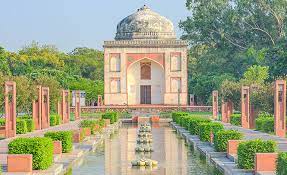
Delhi, the capital of India, is a city with a rich history and a vibrant culture. It is famous for its Mughal and British Era Architecture. But, recently it is getting popular for its Sustainable Architecture. With places with Village like surroundings, like Dilli Haat and Dastkaar Mela, it has now moved to public spaces that are mostly built with Waste Material or are using renewable energy such as Solar Energy to lighten up the surroundings.. Let’s take a look at 5 such Eco places to visit in Delhi….. 2. Bharat Darshan Park – It is situated near Punjabi Bagh Metro Station. You can take Battery Rickshaw to reach the exact location. Here also, the Monuments are made up of Industrial Waste. As the name suggests, the focus is on Indian Monuments such as Sanchi Stupa, Nalanda University, Konark Sun Temple, Meenakshi Temple etc. In the beginning, You are welcomed by a grand Banyan tree, whose lighting effect and fountains in the evening make it very beautiful. Then comes the Kedarnath, Badrinath, Dwarkadish and Jaganath Puri shrines with soothing Mantras Chanting in the surroundings, then comes Hampi, Mahabat Mahal, Taj Mahal and Char Minar. Near Qutub Minar, there is a beautiful staircase, where you can take rest or can click beautiful pictures. 3. Rashtriya Swachhata Kendra, Gandhi Darshan – It is situated near the Main Entry of Raj Ghat, lots of tourist buses stand in the queue in the parking which is in front of Raj Ghat. But less than half of the people move to Gandhi Darshan. May be because people think that it is a boring Museum with lots of antiques and old pictures. But let me tell you that it is not the case with this place. The Rashtriya Swachhata Kendra at Gandhi Darshan added by Modiji in August 2020 is fully high tech and advanced. It has an Ampitheatre, where you will experience a unique 360° audio visual immersive show, which will tell you the story of Swachhata and India. From 1947 when India gained independence from British rule, to the 1980s when the first sanitation programmes were launched by the government, to 2014 when the Swachh Bharat Mission was launched. Then there is gaming section which focuses on segregation of Waste and Outdoor Exhibits show sculptors of Gandhiji with Kids and Rani Mistris in action. 4. Sunder Nursery – Located near JLN Stadium Metro Station on Violet line, it is one of the beautiful restored parks of Delhi. IT can serve as a perfect picnic spot for kids and family amid the hustle and bustle of city life. The garden complex has undergone an extensive restoration project, undertaken by Aga Khan Trust for Culture India, jointly with Archaeological Survey of India (ASI) and Central Public Works Department (CPWD) which currently runs the garden. Now, there are recreated Persian gardens, Rose Gardens, an artificial lake with recycled water, Lakkarwala Burj and Sunder Burj. It has various types of Tree species such as Amrood, Psidium guajava Peelu, Salvadora persica Sonjna, Moringa oleifera Chalta, Dilienia indica It a place of Bird Lovers also because of presence of Birds such as Asian Pied Starling Eurasian Golden Oriole Coppersmith Barbet Eurasian Collared Dove Laughing Dove It has a lakeside Cafe also viz. Fabcafe, here you can fulfill your hunger pangs with delicious Paranthas and Samosas. 5) Dastkaar Mela- Dastkar is a private not-for-profit NGO established in 1981, working to support traditional Indian craftspeople, many of them women and village based, with the objective of helping craftspeople regain their place in the economic mainstream. Dastkar assists craftspeople through support service activities such as capacity building workshops, skills training, collaborative design innovation and product development; helping them transform traditional skills into products that have contemporary appeal, thereby providing craft communities with a source of permanent employment and sustained earning. Dastkar provides marketing platforms to craftspeople, thereby empowering the crafts community to bypass exploitative middlemen and directly operate in the market. Dastkar bazaars and exhibitions bring together craftspeople, producer groups, environmental organisations, social activists & cultural performers with urban consumers, students and international buyers. The Mela is organised time to time @ Nature Bazaar Venue, Kisan Haat Andheria Modh, Anuvrat Marg New Delhi 110074 India. Here, you can explore various Indian Artforms as well as authentic Indian food. Dastkar Mela, Eco Places in Delhi 6) Okhla Bird Sanctuary – Located near Okhla Bird sanctuary metro station, Magenta line, it is one of the most peaceful place in Delhi.During the months of October to March, it is visited by thousands of migratory birds including Shoveller Duck, Northern Pintail, Common Teal, Gadwall Duck and Blue Winged Teal. It is an ideal place for nature lovers and bird watchers.It has an area of approximately 4 square kilometres and is situated at the entrance of NOIDA in Gautam Budh Nagar district of Uttar Pradesh. It is situated at a point where river Yamuna enters the state of Uttar Pradesh leaving the territory of Delhi. It is one of the 15 bird sanctuaries in the state. Okhla Bird Sanctuary, Eco places in Delhi With all these beautiful places, We have Qudsiya Bagh (near Kashmere Gate), Roshnara Bagh, Kamla Nehru Ridge which are the Green Lungs of Delhi but need immediate , care and attention as three of them are not in a good state as per preserving a historical perspective. Fortunately, lot of development work is underway in Roshanara Bagh. The Municipal Corporation of Delhi is planning to add new features to the Roshanara Bagh, including a watch tower, play zone, and cafeteria. Work on reviving the lake is already underway and is expected to be completed by December, 2023.