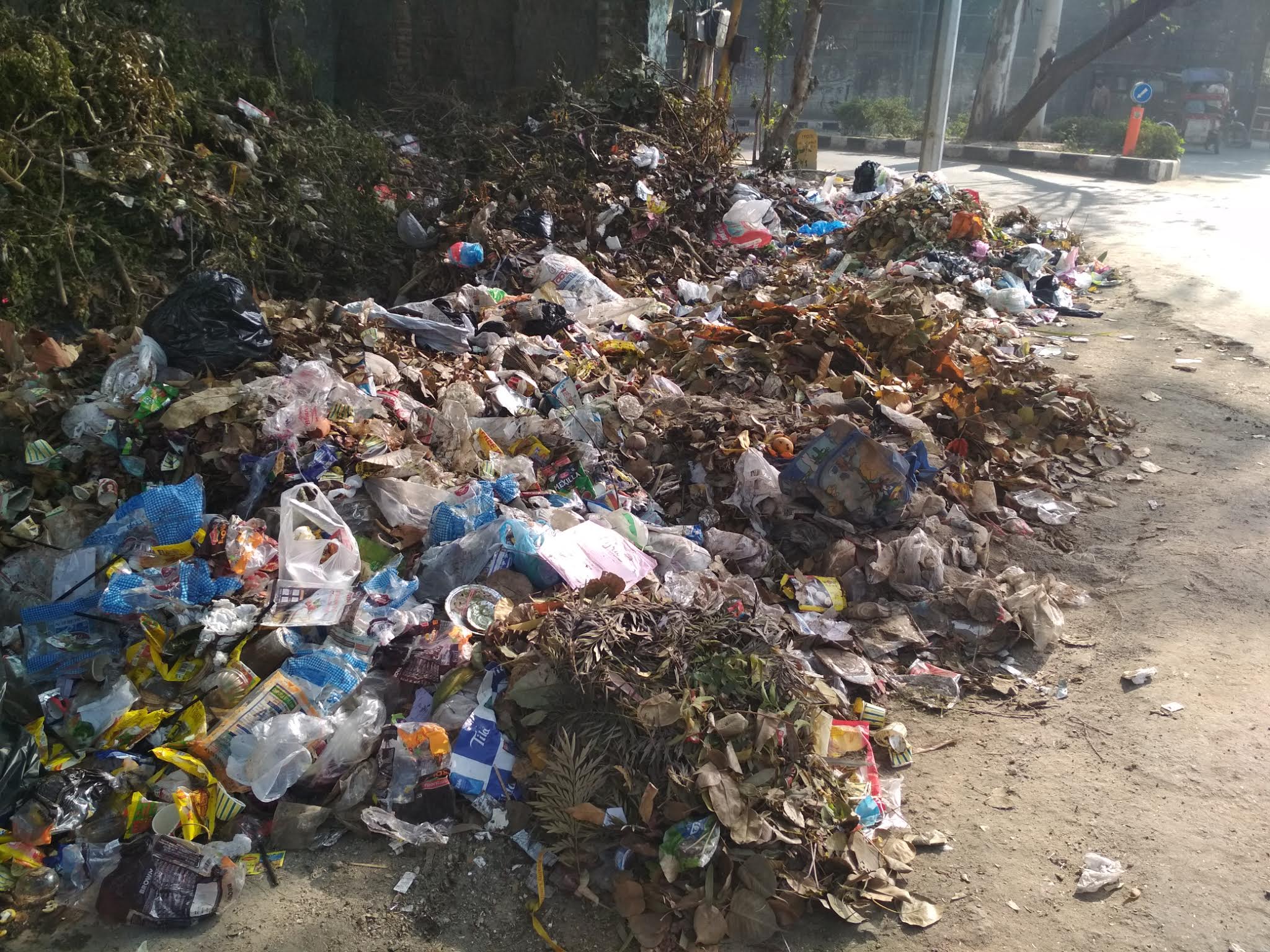
South India faces significant challenges in managing municipal solid waste, with issues ranging from inadequate collection and processing to improper disposal and a lack of public awareness. The region struggles with high waste generation rates, especially in urban areas, and a large proportion of waste ends up in landfills or is openly dumped, posing environmental and health risks. Overflowing Cities, Sinking Futures Walk past the towering Kodungaiyur landfill in Chennai or the smoke-shrouded skies of Kochi’s Brahmapuram, and it’s clear: South India is buckling under the weight of its own waste. The numbers are staggering. Every day, the five southern states—Tamil Nadu, Karnataka, Kerala, Andhra Pradesh, and Telangana—generate over 45,000 tonnes of municipal solid waste. That’s nearly one-third of India’s total. With rapid urbanisation and rising consumption, this figure is expected to double by 2035. But it’s not just about volume—it’s about failure. Poor segregation, outdated infrastructure, neglected waste workers, and public apathy have turned trash into a ticking time bomb. A Snapshot of South India’s Waste Landscape Here’s what daily waste generation looks like in some major cities: Hyderabad: 6,500 tonnes, Chennai: 6,300 tonnes, Bangalore: 4,500 tonnes, Coimbatore: 1,100 tonnes and Kochi: 700 tonnes. Yet, less than 30% of this waste is processed scientifically. Most of it ends up in open dumps, burning landfills, or clogged water bodies. In places like Jawahar Nagar (Hyderabad) and Kodungaiyur (Chennai), leachate and methane leak into nearby neighbourhoods, affecting both health and livelihoods. Villages on city outskirts are turning into dumping grounds—without consent, compensation, or accountability. SECTOR-WISE WASTE GENERATION IN INDIA When we break down India’s waste, two things stand out. First, more than 50% of municipal solid waste is organic, made up of food scraps, market waste, and garden clippings. Ideally, this could be composted or turned into biogas. But with over 70% of waste still unsegregated, most of it ends up in dumpsites, mixed with inerts (33%), plastics (6%), and other dry waste. Recyclables—like paper (7%), metals (2%), and glass (2%)—are lost in the mix, reducing both resource recovery and income for waste pickers. Second, when we look at the sectoral sources of this waste, households and public spaces account for about 45%, but industries (25%), agriculture (10%), biomedical (10%), and e-waste (10%) form the rest. These non-household streams often include hazardous materials, but are rarely tracked or treated properly. Together, these two charts reveal a deeper problem: waste in India isn’t just a disposal issue—it’s a mismanagement crisis. Solving it means targeting both what we throw and who throws it. WHY THE SYSTEM IS COLLAPSING ? 1. Lack of Segregation Despite laws mandating source segregation, over 70% of waste remains mixed. This makes recycling or composting virtually impossible. 2.Outdated Infrastructure Dry waste collection centres are sparse. Composting facilities and waste-to-energy plants are either underused or dysfunctional due to poor planning. 3.Invisible Waste Workers South India’s recycling backbone—its 60,000 to 80,000 informal waste workers—remain invisible in policy. Many, often women from marginalized communities, lack basic protections like health insurance or safety gear. 4. Plastic Overload Single-use plastics still dominate markets. Despite bans in Tamil Nadu and Kerala, enforcement is lax, and illegal trade thrives. 5. Failed Waste-to-Energy Projects Several WTE plants shut down due to toxic emissions and community resistance. The 2023 Brahmapuram fire in Kochi was a stark reminder—poisonous smoke from burning plastic engulfed the city for days. A CRISIS BEYOND TRASH This isn’t just a sanitation issue—it’s an environmental and humanitarian crisis. Toxic air from landfill fires, Poisoned rivers like the Adyar (Chennai) and Musinagar (Hyderabad), Health hazards for waste pickers and informal settlers, Destroyed farmlands and contaminated groundwater near dump sites. But in this landscape of neglect, Bangalore is carving a different path. BANGALORE: FROM GARBAGE CITY TO GREEN HOPE Once infamous for its 2012 garbage crisis, Bangalore is slowly transforming into a model of urban resilience. Generating over 4,500 tonnes of waste daily, the city is investing in solutions rooted in community action, decentralised systems, and smart technology. Here’s how it’s making a difference: 1. Segregation at Source Bangalore mandates household-level segregation into wet, dry, and hazardous waste. In areas like HSR Layout and JP Nagar: QR-coded bins and tracking apps are in use. Kannada-language campaigns build awareness. Fines and incentives promote compliance. In well-segregated wards, up to 70% of waste is diverted from landfills. 2. Composting & Biomethanation Since 60% of Bangalore’s waste is organic, the focus is on converting it into resource. Kasa Rasa, a citizen-run composting unit in Koramangala, is a local success. Biogas plants at Domlur and KR Market turn food waste into cooking fuel. BBMP mandates bulk generators (like tech parks) to manage their own waste on-site. 3. Dignity for Waste Workers Groups like Hasiru Dala and Saahas Zero Waste have transformed waste work in Bangalore. Workers now have ID cards, safety gear, and access to healthcare. Many are part of formal collection systems, with regular pay and recognition. Still, more needs to be done—legal protections and co-operative ownership are the next steps. 4. Smart Technology for Smarter Cities Tech is helping streamline waste operations: GPS-tracked collection trucks. IoT-enabled bins. Citizen complaint redressal via the Swachhata App. Real-time ward-level performance dashboards. Bangalore is exploring AI-based sorting and open data platforms to reduce leakages and corruption. 5.Circular Economy & Safe Waste-to-Energy While past WTE models failed, new approaches are emerging: RDF (Refuse-Derived Fuel) plants at Kannahalli and Doddabidarakallu process 750 tonnes/day. Startups like Swachha Eco Solutions upcycle plastic into tiles and furniture. But the key lies in Extended Producer Responsibility (EPR)—holding brands accountable for the waste they create. 6.Rebuilding Infrastructure Instead of centralised landfills, Bangalore is building decentralised hubs: Composting and biogas units at ward level. More Dry Waste Collection Centres (DWCCs). Engineered landfills with leachate control and gas capture. It’s a slow process—but the blueprint is changing. 7. Pay-As-You-Throw Pilots in select wards are testing user fees and Pay-As-You-Throw (PAYT) models. Bulk generators like malls and hotels are being charged. Households may follow, depending on volume and segregation. This economic shift encourages responsibility—and disincentivises waste. 8.Civic Action & Behavioural Change At the heart
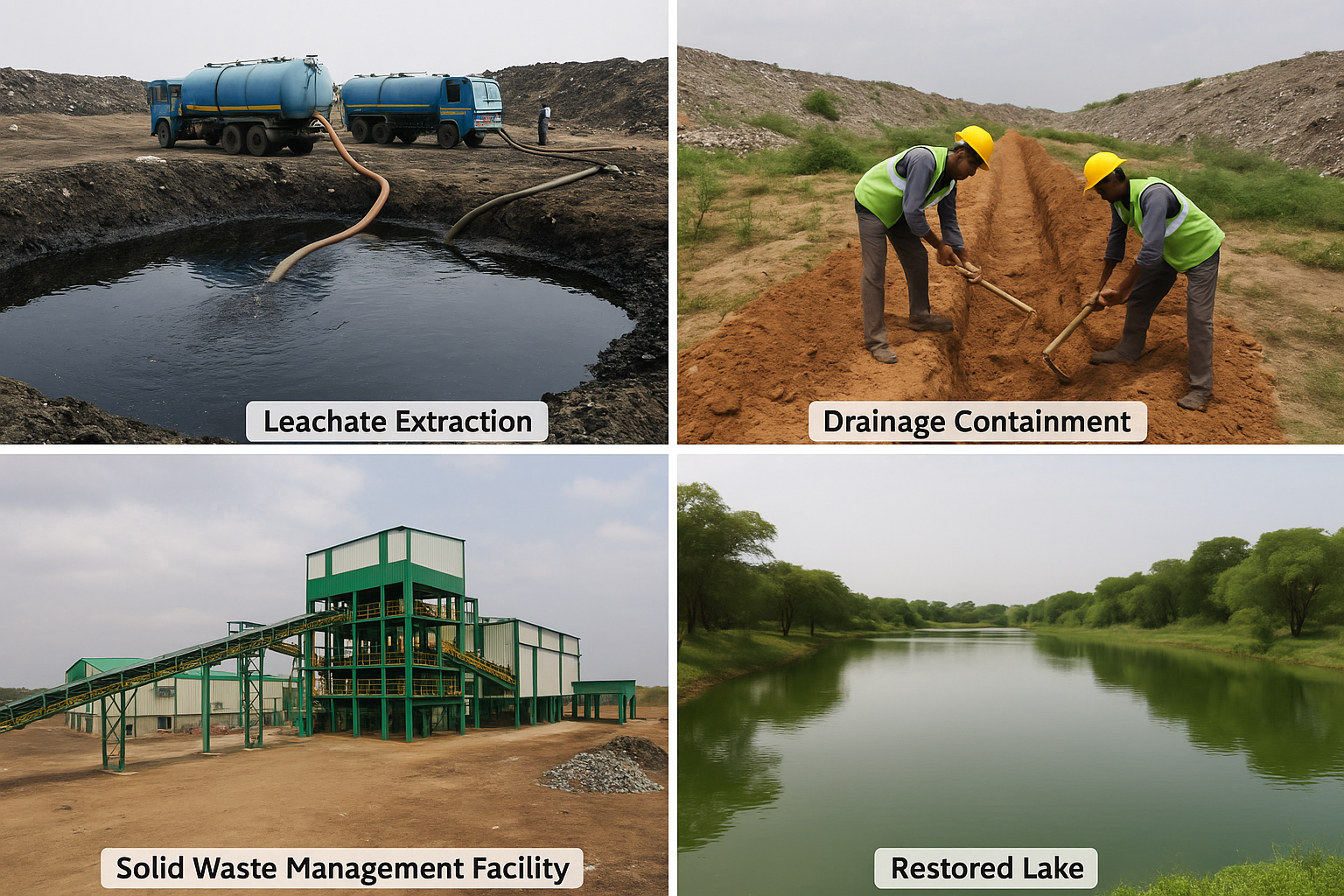
Bhandwari Lake Restoration
Originally part of the Aravalli hill ecosystem, the Bhandwari landfill sits adjacent to water bodies that act as seasonal ponds. Over time, untreated leachate from the landfill seeped into these ponds—contaminating groundwater, harming flora and fauna, and posing health hazards to nearby forest land and wildlife. The problem escalated to the extent that animals in the Aravalli forests were reportedly drinking from these toxic reservoirs. ✅ Restoration Actions Underway 1. Leachate Extraction & Treatment Tanker-based removal: The Municipal Corporation of Gurugram (MCG) has begun pumping legacy leachate from the landfill’s ponds into tankers. STP discharge: These tankers transport leachate to the Behrampur and Dhanwapur sewage treatment plants—each with over 400 MLD capacity—for safe treatment before discharge. MCG aims to empty the polluted ponds before the monsoon and plans additional infrastructure to halt leachate infiltration into adjacent forests. 2. Drainage Containment A dedicated drainage network is being constructed around the landfill to prevent future leaks. This includes: Trenching systems Bund formations Strategic redirection of surface water These efforts are designed to contain current contamination and block further spread into groundwater and forest areas . 3. Solid Waste Management Upgrade The Bhandwari solid waste management facility is being revived under a public-private partnership from 2017–2019, with backing from Ecogreen Energy Pvt Ltd. The ₹4.3 billion project includes: Daily handling of 1,250 TPD of waste Processing via refuse-derived fuel (RDF) Generation of ~10 MW of energy per day This redevelopment is key to reducing landfill size and subsequent contamination. 🦺 Local & Ecological Importance Forest protection: These ponds are located in the Aravalli buffer zone, home to diverse wildlife. Clearing leachate helps restore ecological balance. Public health: Reducing groundwater pollution is vital for nearby human populations—especially as toxic leachate seepage can render water unsafe. Environmental compliance: Prompted by local activism, the initiative aligns with legally binding obligations to preserve forest ecosystems. 🚧 Challenges & What Lies Ahead Challenge Description Speed vs. scale The quantity of leachate is large; clearing it before the monsoon demands logistical precision. Long-term prevention Beyond emergency pumping, long-term solutions like engineered liners and continuous monitoring are needed. Governance coordination Integrating MCG, Haryana Govt, STPs, and private partners requires strong oversight. Community engagement Ensuring transparency, updates, and public reassurance is crucial. 🌱 Restoration Roadmap – What Next Advanced lining and cap systems for the landfill to halt future leachate generation. Routine environmental monitoring of water quality and wildlife health. Engineering wetlands or bio-treatment zones to naturally manage minor seepage. Waste diversion strategies—such as composting and recycling—to minimize landfill input. Community stewardship and educational outreach to maintain vigilance and awareness. ✅ Conclusion The Bhandwari Lake restoration is a vital environmental intervention. From actively removing hazardous leachate and bolstering drainage infrastructure to revamping waste management operations, the success of this initiative will directly protect the Aravalli forests, groundwater reserves, and regional ecosystems. But this must be more than a short-term fix. A forward-thinking, sustainable strategy involving engineering safeguards, community participation, and pollution prevention is essential to ensure the landfill doesn’t turn into a recurring ecological threat. 📣 How You Can Contribute Stay informed through MCG and Haryana government disclosures. Join or support local environmental groups monitoring forest and water health. Encourage practices like waste segregation and composting to reduce landfill waste. Advocate for robust engineering solutions—like geomembrane liners—at municipal and civic forums. Together, Gurugram can set a benchmark for landfill rehabilitation and natural resource restoration in urban India. For more such articles, please visit ecodastkaari.in.

Top 6 ways to lead a Sustainable Lifestyle…..
Let’s know more about composting , recycling and upcycling to lead a Sustainable lifestyle and the Organisations which are doing it. 1.Composting It is very necessary nowadays, because all landfills are almost filled up, be it Narela, Bawana, Okhla or Ghazipur in Delhi. If we continue to throw away our mix waste it will lead to Global Warming. So, it’s better to segregate our Daily Vegetable Waste like peels and leftovers in a container and plant waste like dried leaves and flowers. We can also put egg shells, paper and coconut husk to it. Food turns into compost through the hard work of small microorganisms like bacteria, fungi, and protozoa. On a small scale, in your backyard or neighbourhood, a compost pile should consist of three things: food scraps, water, and dry, woody material like yard trimmings or raked leaves. Yard trimmings are frequently referred to as “browns” and are high in carbon. Food scraps are called “greens” and are high in nitrogen. A compost pile should typically have twice as many browns as it does greens. Aside from preventing a pile from turning into a sloshy mess, browns are bulkier and create space for oxygen to move throughout the pile. That oxygen helps tiny microbes decompose food waste through a process called aerobic digestion. In landfills, deep piles of trash prevent oxygen from reaching decomposing food, and it’s instead broken down by microbes that can survive without air. The anaerobic digestion practiced by those microbes produces methane. In contrast, as aerobic microbes break down waste—first, easier sugary compounds, and then proteins and fats, and then finally fiber —they emit carbon dioxide, which is also a greenhouse gas, but less potent than methane. The fresh compost left after several months is in a slower state of decomposition; it’s rich with microorganisms and nutrients such as nitrogen, phosphorus, and potassium. That’s why Farmers calls it “Black Gold“. Composting is quiet easy, but for more information and composting products, you can visit dailydump.org/ . 2. Recycling Floral Waste Floral waste is one of India’s biggest pollutants, on land and water, accounting for nearly a third of all solid waste in the country, according to statistics. Because they have been offered in prayers, the dead flowers are considered holy, and not to be disposed of with the other rubbish. And so they get dumped into the nearest body of water, usually a river. The Ganges, revered and adored as Ganga Ma by millions, takes in more than eight million metric tonnes of flower waste every year, says UN Climate Change. Now imagine this in hundreds of rivers and lakes throughout the country. Floral waste not only clogs up the water channels, it also releases pesticides and insecticides into the already murky waters, harming human beings who drink from it, as well as resident marine life. In areas with no convenient access to water, flower waste is simply left in large piles on streets, or thrown into landfills. This causes a different type of problem, increasing carbon emissions and other types of air and soil pollution. Thankfully, social entrepreneurs in parts of India have come to the rescue over the past few years, collecting and cleaning these discarded flowers and turning them into usable products, such as organic compost and, more valuably, soaps, candles, holi colours, incense sticks and natural dyes. phool.co, avacayam.com and gulmeher.com are some examples of organisations which are doing this great work. The best part is that they are providing employment to women and disabled people. So that need students could read from them. 3. Discarded Clothes According to the World Resources Institute, it takes 2,700 liters of water to make one cotton shirt. And when consumers throw away clothing in the garbage, not only does it waste money and resources, but it can take 200+ years for the materials to decompose in a landfill. So, it’s better to do mindful shopping and also sometimes thrifting and upcycling of dresses, like making a dress out of an old Sari. In India, you can also sell your clothes to people who make Daris (Rugs), toys or exchange them with steel utensils. You can also donate them to goonj.org/ which has created a barter between urban surplus and village communities labour, triggering large scale rural development work. doodlage.in/ by Kriti Tula is also doing a commendable job by Upcycling factory waste into short limited edition collections. They Recycle post consumer waste and post cutting scraps into new fabrics to create season-less well finished garments made for longevity. What they further waste is segregated and converted into accessories, soft furnishing products and paper to make packaging or stationery products. I just recently visited the Rock garden and was astonished to see the Doll museum made by Nek Chand ji with old clothes. I think we need such museums in every state. 4) USED BOOKS After every change in session, there is a pile of used books and notebooks with every student. Generally, we sold it off to Kabadiwala or give it to siblings. But, we can also donate them to Book banks or Mobile Libraries. So that needy students could read from them. 5) HOME DECORE We all love to decorate our Homes but sometimes unknowingly we end up in buying unsustainable Home Decor like Plastic Flowers, Containers or Baskets. Instead of it we should use home decor that are rooted in Sustainability and Craftsmanship. Indian craftsmanship and age-old techniques of embroidery, stitching and weaving are having their much-deserved moment in the sun with the advent of several home decor brands that are reviving these practices, employing artisans, and bringing a contemporary flair with fresh designs. Being sustainable, using eco-friendly packaging and embracing the slow, mindful production cycle are other philosophies that make them better for the environment. This has revived our old trends of chikankari, macrame and croche works back in the trend for Table covers, Fridge Covers, curtains and coasters. Green live plants look more beautiful than artificial plants, they
Gandhi ji and Sustainability
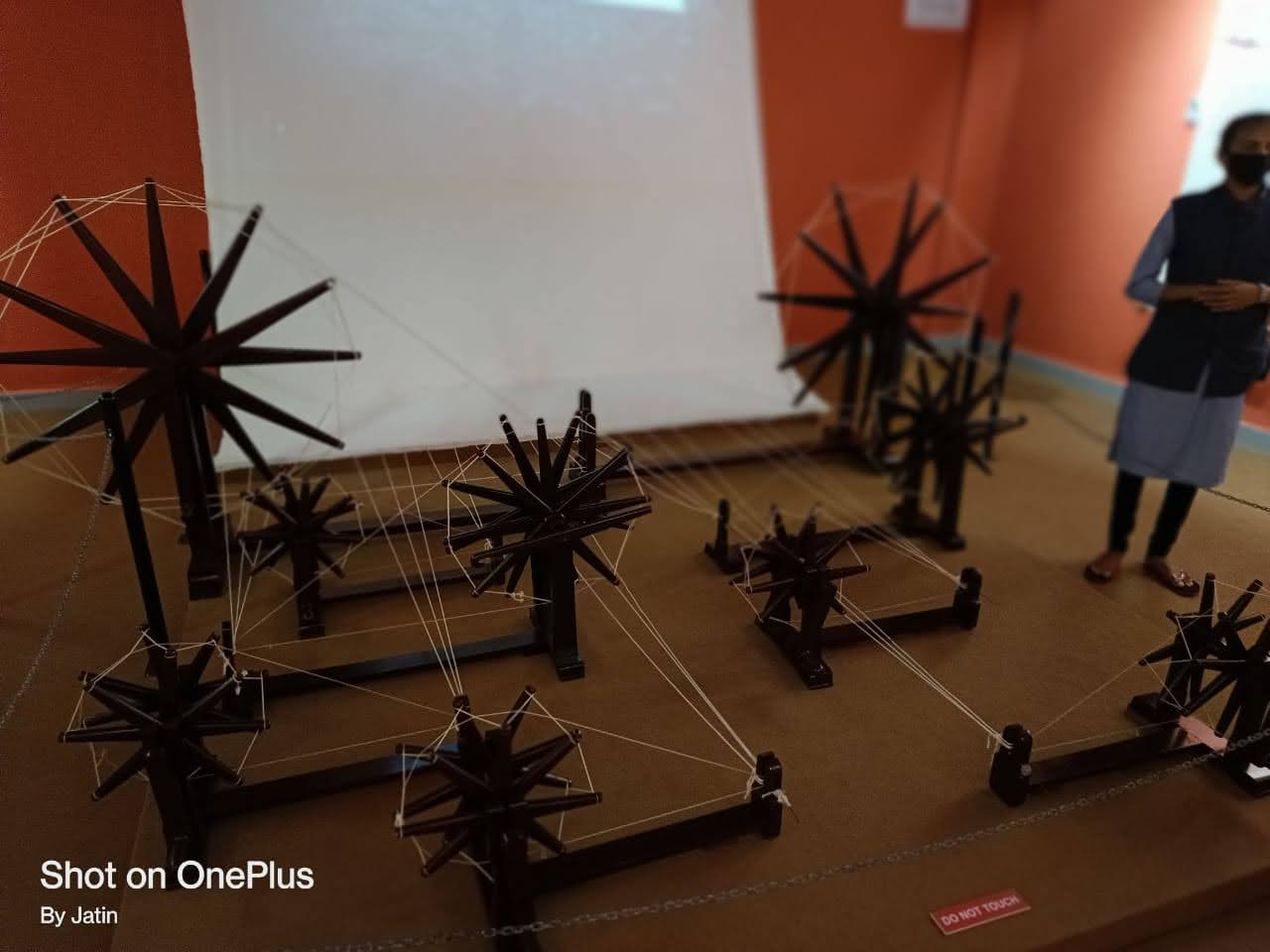
We all know about Gandhiji’s ideology about Satya, Ahimsa, Sarvodaya and Antodaya. But, if we analyse all his principles deeply, we will realise that all his principles also align with Sustainable development goals of eliminating hunger and poverty . He first used the word Sarvodaya in modern times. Sarvodaya means ” the rise or welfare of all”. He borrowed his concept from John Ruskin’s Unto This Last. The proper rendering of which would be Antodaya i.e. upliftment of the last person in the society rather than Sarvodaya. Here’s how Gandhi’s ideas intersect with sustainability: Simplicity and Minimalism: Gandhi advocated for a simple and minimalist lifestyle, promoting the idea that individuals should live with only what they need and avoid excessive consumption. This aligns with the sustainability principle of reducing consumption and waste to conserve resources and minimize environmental impact. Self-sufficiency and Localism: Gandhi emphasized the importance of self-sufficiency at the local level, promoting village industries and cottage production. He believed in empowering communities to meet their own needs, reducing dependence on centralized systems. This concept resonates with the sustainability goal of promoting local economies, reducing transportation emissions, and fostering resilience. Respect for Nature: Gandhi had a deep respect for nature and believed in living in harmony with the environment. He advocated for sustainable agricultural practices, including organic farming and crop rotation, to maintain soil fertility and preserve ecosystems. Gandhi’s reverence for nature parallels modern sustainability efforts to protect biodiversity and ecosystems. Non-violence and Justice: Gandhi’s philosophy of non-violence (ahimsa) extended to all living beings, emphasizing compassion and empathy. This ethical stance underpins modern sustainability principles, which seek to address social justice issues and ensure equitable access to resources for present and future generations. Community and Collaboration: Gandhi emphasized the importance of community and collective action in creating social change. He believed in the power of individuals coming together to address common challenges, which aligns with the collaborative approach inherent in sustainability efforts, such as community-based initiatives and participatory decision-making processes. Long-term Vision: Gandhi’s vision of societal transformation was deeply rooted in long-term thinking and intergenerational equity. He understood that true progress must consider the well-being of future generations, echoing the sustainability principle of ensuring that current actions do not compromise the ability of future generations to meet their needs. At the heart of Gandhi’s textile legacy lies the Khadi revolution. Khadi, a simple hand spun and handwoven fabric, became the symbol of Gandhi’s vision for a self-reliant and independent India. He believed that Khadi was not just a fabric but a means to connect the people of India to their roots, to the rural villages, and to the dignity of labour. Gandhi himself was a devoted spinner, often pictured with a Charkha, the traditional spinning wheel. Through his actions, he encouraged millions of Indians to spin their own Khadi cloth, promoting economic self-sufficiency and empowering rural communities. The Khadi movement was not just a clothing choice but a powerful political and economic statement. Gandhi’s impact on Indian textiles transcends his lifetime. His emphasis on sustainability, eco-friendliness, and ethical production methods in textiles was far ahead of his time. Today, as the world grapples with environmental challenges, his principles find renewed relevance. The Khadi movement, with its focus on hand spun and handwoven fabrics, represents a sustainable alternative to mass-produced textiles. It champions the use of natural fibers, minimal energy consumption, and support for local communities. These principles align with modern notions of ethical fashion and sustainability. Gandhi ji’s emphasis of using locally available materials is applied professionally by Gilli Mitti Farms which is promoting the concept of Mud Houses, Permaculture and Village homestays. The use different natural building techniques like earthbag, wattle and daub. They also use Clay paints and Lime paints instead of toxic paints. They have also made a rescue farm for animals named as Tuk Tuk gilhari, based in Noida. Follow us on Facebook and Instagram to stay up to date with the latest in sustainable fashion and ethical fashion from India. We love to hear from you!
Climate Change
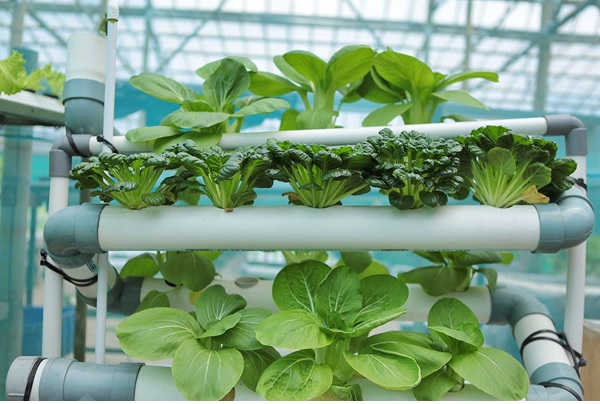
Climate change refers to long-term shifts in temperatures and weather patterns. These shifts may be natural, such as through variations in the solar cycle. But since the 1800s, human activities have been the main driver of climate change, primarily due to burning fossil fuels like coal, oil and gas. Burning fossil fuels generates greenhouse gas emissions that act like a blanket wrapped around the Earth, trapping the sun’s heat and raising temperatures. Examples of greenhouse gas emissions that are causing climate change include carbon dioxide and methane. These come from using gasoline for driving a car or coal for heating a building, for example. Clearing land and forests can also release carbon dioxide. Landfills for garbage are a major source of methane emissions. Energy, industry, transport, buildings, agriculture and land use are among the main emitters. Climate change can affect our health, ability to grow food, housing, safety and work. Some of us are already more vulnerable to climate impacts, such as people living in small island nations and other developing countries. Conditions like sea-level rise and saltwater intrusion have advanced to the point where whole communities have had to relocate, and protracted droughts are putting people at risk of famine. In the future, the number of “climate refugees” is expected to rise. Indian culture has always given importance to Sustainability and Environment Conservation. The Aranakayas (ancient texts), mention the importance of Forests. Forests help in soil, biodiversity and wildlife conservation. They acts as Carbon Sinks and works against Climate Change naturally. They provide livelihood and habitat to tribal people. Several communities such as Bishnois and Jasnathis practice Forest and wildlife conservation very seriously since centuries. Forests also support endangered animal population such as Tiger which indirectly helps in generation of Eco Tourism opportunities. Fishing, fuel wood, timber, Fodder and grazing, Nutrient Cycling are some of other benefits of preserving Forest cover. They also help in keeping our water resources clean and pure and moderate extreme evens such as Cyclone storms, Flash floods or Droughts. Spiritual and Recreational tourism can be promoted through them which can give a great boost to our economy. Talking about the modern times, with increasing population, problems like pollution and unsustainable practices of waste management are also increasing. We must go back to our roots and follow simple methods of living like composting our bio-degradable waste, using cloth bags, planting trees, rain water harvesting etc. Green fashion must be promoted instead of fast fashion and consumerism. We need to revive old conservation set ups like Bawadis, less use of pesticides and using cow dung as manure, which gradually should take up pace. As government has introduced new schemes in the budget 2023-24 such PRANAAM & GOBARDHAN which supports the above said things for farming methods. Other than these concepts, we have Permaculture, Aquaponics, Hydroponics and methods like Crop Rotation, Zero Tillage and Intercropping, which promotes zero waste and efficient use of resources. But all these practices should be taken early and seriously, otherwise it will be too late.
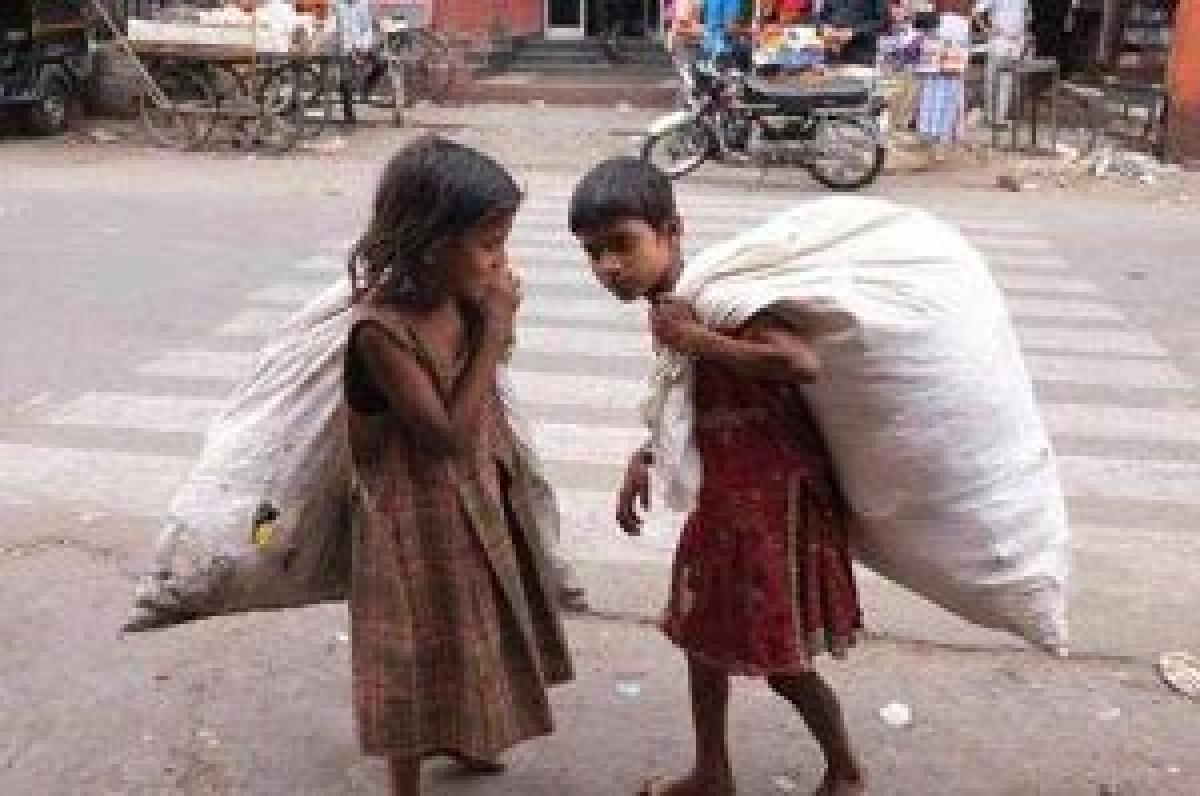
Zoya and Ayaan
This is a fictional story of Ayaan and Zoya, based on children who live in the slums of Ghazipur, which is near now closed Ghazipur Landfill in east Delhi. Their father is a Ragpicker and both of them also helps him in rag picking. Ayaan studies on phone but doesn’t tell anybody about it. Zoya attends daily classes run by a Local NGO Chintan. Their day starts with going to a community toilet, which is newly built in their area. Then after a quick breakfast, they start with their daily routine of rag picking i.e. picking up plastic bottles, cardboard or some metal in the garbage discarded by local people. Earlier, they used to climb up the mountain of trash, but now since it’s closed, they keep roaming on streets, occasionally fighting with stray Dogs. But, they have the courage facing all this menace which is external as well as internal. As they daily come in close contact with discarded diapers and sanitary napkins. Most harmful is the medical waste like syringes or a broken thermometer with mercury releasing from it. Due to these conditions and absence of any hand gloves or safety gear, they keep falling ill on regular basis. But despite of all these hardships, they have a sweet smile on their face, because they keep finding happiness in little things like blooming of a flower or a rain shower or a simple sweet to eat. On a similar day, after a quick escape from dogs, Zoya and Ayaan were returning to their home slum. During red light of traffic, a child was fighting for a toy with his Mom. Suddenly, the mother noticed Zoya and Ayaan who were dancing in rain and pointed towards them. She says that you should learn something from them, you should not be so stubborn. She tells him to concentrate on his studies first and then think about any toy or chocolate because lot of children don’t get an opportunity to study in a good school like him. After seeing them, the boy also wanted to play with them but he nods his head in favour of his mom. Meanwhile, the traffic signal turns green and the car quickly moves away. Zoya, quickly rushes to her class and forcibly took Ayaan also to her classes. Ameena, the instructor welcomes both of them. She reminds the class that the students need to tell about their dreams i.e. What do they want to become? Zoya tells that she wants to be a Supervisor of the Gulmeher office. Gulmeher was started by CSR wing of IIFLS, after opening up a Waste to Energy plant. It provides employment to women by turning them from waste pickers to artists. They give them basic training of tailoring and embroidery. Then they become proficient in making artistic products like photo frame, greeting cards decorated with dried flowers, which are collected from nearby Ghazipur flower market. Zoya became very happy, when once she visited the office with her mother, who works there. Then it was the turn of Ayaan to tell his dream. Hesitatingly, he said that he wants to be a Rapper. Then Ameena asks him to recite a Rap. He does so in a quirky manner. His Satirical Rap was to the point on the failure of Society and Government Organisations to manage the waste and the unfortunate condition of Landfills of Delhi. He seems to be impressed by the pitch of Daily Dump’s founder and her ideology on Shark Tank. He is also seems to be worried about the increasing case of fires and landslides in the Landfills. He warns the Delhites to think about the issue seriously otherwise tell them to face the consequences like Kochi landfill fires. He praises the waste management techniques of Indore and Pune. Following this, the whole class, instructor and Zoya claps continuously.

CIRCULAR STRATEGIES THAT ARE PART OF INDIA’S HERITAGE
A nation that has no cultural heritage is like an orphan who has nothing to feed upon. An individual human being, a race or a nation must necessarily have certain roots somewhere. India is deep rooted in the culture of her past—the glorious past. India is a vast country, and centuries old. It is difficult to sum up her heritage in a few words. Her past has been full of glory. She has been the birth place of many great men and women. She has given birth to many great movements in religion, art and literature. These movements have not been limited to India alone, but they have travelled to other parts of the world. The India of today has a rich past over which we can look back with pride. Our past has given us a definite way of life, which is typically Indian and yet universal in approach. Indian heritage definitely shows us the way forward in leading a sustainable lifestyle while contributing towards Circular Economy. History tells us that both floods and droughts were regular occurrence in ancient India. Perhaps this is why every region in the country has its own traditional water harvesting techniques that reflect the glory which tells us that both geographical peculiarities and cultural uniqueness of the regions. The basic concept underlying all these techniques is that rain should be harvested whenever and wherever it falls. 1. Ancient Architecture: Archaeological evidence shows that the practice of water conservation is deep rooted in the science of ancient India. Excavations show that the cities of the Indus Valley Civilisation had excellent systems of water harvesting and drainage. The settlement of Dholavira, laid out on a slope between two storm water channels, is a great example of water engineering. Chanakya’s Arthashashtra mentions irrigation using water harvesting systems. Sringaverapura, near Allahabad, had a sophisticated water harvesting system that used the natural slope of the land to store the floodwaters of the river Ganga. Chola King Karikala built the Grand Anicut or Kallanai across the river Cauvery to divert water for irrigation (it is still functional) while King Bhoja of Bhopal built the largest artificial lake in India. Drawing upon centuries of experience, Indians continued to build structures to catch, hold and store monsoon rainwater for the dry seasons to come. These traditional techniques, though less popular today, are still in use and efficient. 2. Daily Practices: In South India, people used to eat their meals on Banana leaf , earlier they used to used to compost it also, ditching the disposable culture. Ladies used to preserve vegetables in pickle form in dry areas and hilly areas, as vegetables were not easily available during those days. They used to efficiently use every part of the vegetable, be it its seeds or peels. Hence, significantly reducing biodegradable waste and contributing to Circular Economy. Earlier, every household used to have a Cow. The milk given by her was truly healthy and nutritious. But now, they are forced to live on roads in miserable conditions feeding on garbage. Hence, the milk given by her is also not so pure any more. It is full of harmful chemicals and artificial hormones. The cow dung was used as fertilizers, now it’s all dumped in landfills blindly. Earlier, women used to decorate themselves and the house with natural flowers and Rangolis, now it is also replaced with artificial flowers and paper Rangolis. Various art forms such as Warli, Madhubani and Rogan art have been developed because of this practice. They used to use sil-batta for making delicious sauces and used to sun dry their Masalas and pickles. But now they use mixer grinder and everything is available in packets, be it masalas or pickles. And thus due to lack of physical activity, they face a lot of troubles and diseases. They underestimate the power of Sun and Moon. 3. Handicrafts Another great example of circular economy was our handicrafts, various types of Saris be it Banarasi or Jamdani, various types of tying and dyeing techniques, Bandhini and Patola. All used some organic materials and the final print looked very beautiful. It used to give employment to the whole village, but now the conditions are different. Now, they are practiced by a handful of people and the end product is very costly. Hence, is used as a niche product and leaving lakhs of people unemployed. Various types of traditional such as Kalamkari, Shibori, Warli, Hand Block, Dabu, Indigo & Phentiya prints were quite popular in those times and were patronized by local rulers and Kings, unlike today’s time. Earlier, Kings were equally involved with agricultural decisions and irrigation resources. Now, things are different as these things are handled by different ministries, who are accountable to Prime Minister. But, there is always a lack of coordination and will power is seen, among themselves. Hence, we should always study about our ancient practices and should learn circular strategies from them. In current scenarios, Indore and Pune are serving as the best examples of Circular Economy because they are smartly segregating the waste. Social Start ups such as Daily Dump, Phool.co and Gulmeher are working on the same lines by encouraging composting and recycling flower waste respectively.